
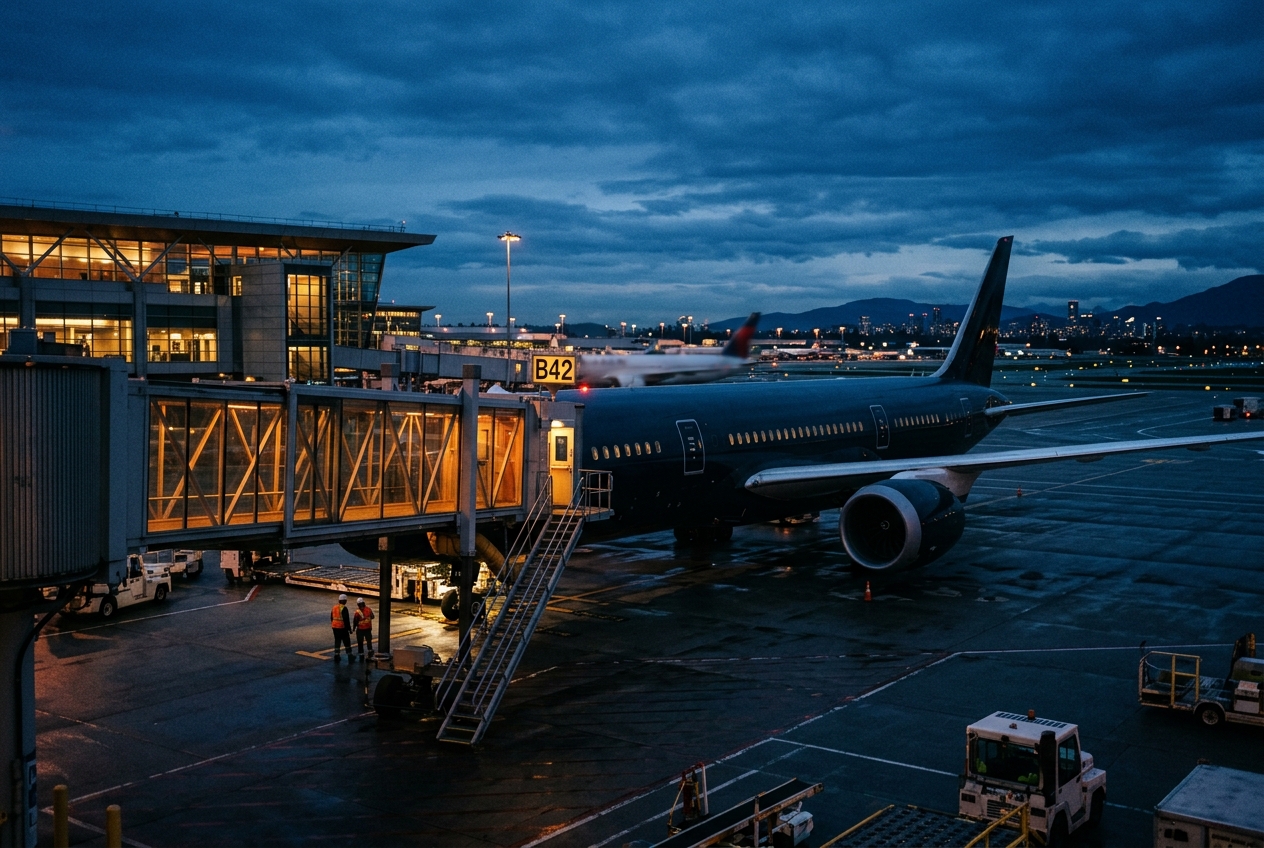
Japan's primary international gateway serving Greater Tokyo.
Opened
1978
Location
Narita, Japan
Narita International Airport (IATA: NRT, ICAO: RJAA) is Japan's busiest international airport and one of the major aviation hubs in Asia. Located approximately 60 kilometers east of central Tokyo in Chiba Prefecture, it handles tens of millions of international passengers annually and serves as a key transpacific and intercontinental hub.
The airport was opened in 1978 after years of controversy and protests from local farmers and activists opposed to its construction. It replaced Haneda Airport as Tokyo's primary international gateway, though Haneda has since reclaimed significant international traffic following runway expansions.
Narita operates two main runways and three terminals, accommodating a wide range of international and domestic carriers. It remains a critical node for cargo operations in Asia, consistently ranking among the world's top airports for international freight volume.
Terminals
The airport has three passenger terminals: Terminal 1 serves primarily Star Alliance and SkyTeam carriers, Terminal 2 serves Oneworld and other carriers including Japan Airlines, and Terminal 3 is a low-cost carrier facility.
Getting to & from
Ground transport to central Tokyo includes the Narita Express (N'EX) train to major city stations, Keisei Skyliner rapid rail service, highway buses, and taxi or limousine options.
Airlines here
All Nippon Airways (ANA) and Japan Airlines (JAL) are the primary hub carriers, alongside numerous international airlines including United, Delta, American, Cathay Pacific, and Korean Air.
Notable facts
- ›Construction of Narita Airport was met with significant protest movements, particularly from farming communities in Sanrizuku, some of which lasted for decades.
- ›The airport handled over 40 million passengers annually before the COVID-19 pandemic significantly reduced traffic.
- ›Narita consistently ranks among the world's top airports for international air cargo throughput.
- ›The airport has only two runways despite its high traffic volume, a legacy of land acquisition disputes that limited expansion.
- ›Terminal 3, opened in 2015, was designed specifically for low-cost carriers and features an unusual track-marked floor guiding passengers to gates.
This profile is provided for general information only. Details may be inaccurate or outdated — always verify with the airport's official website before acting on them.