Translate


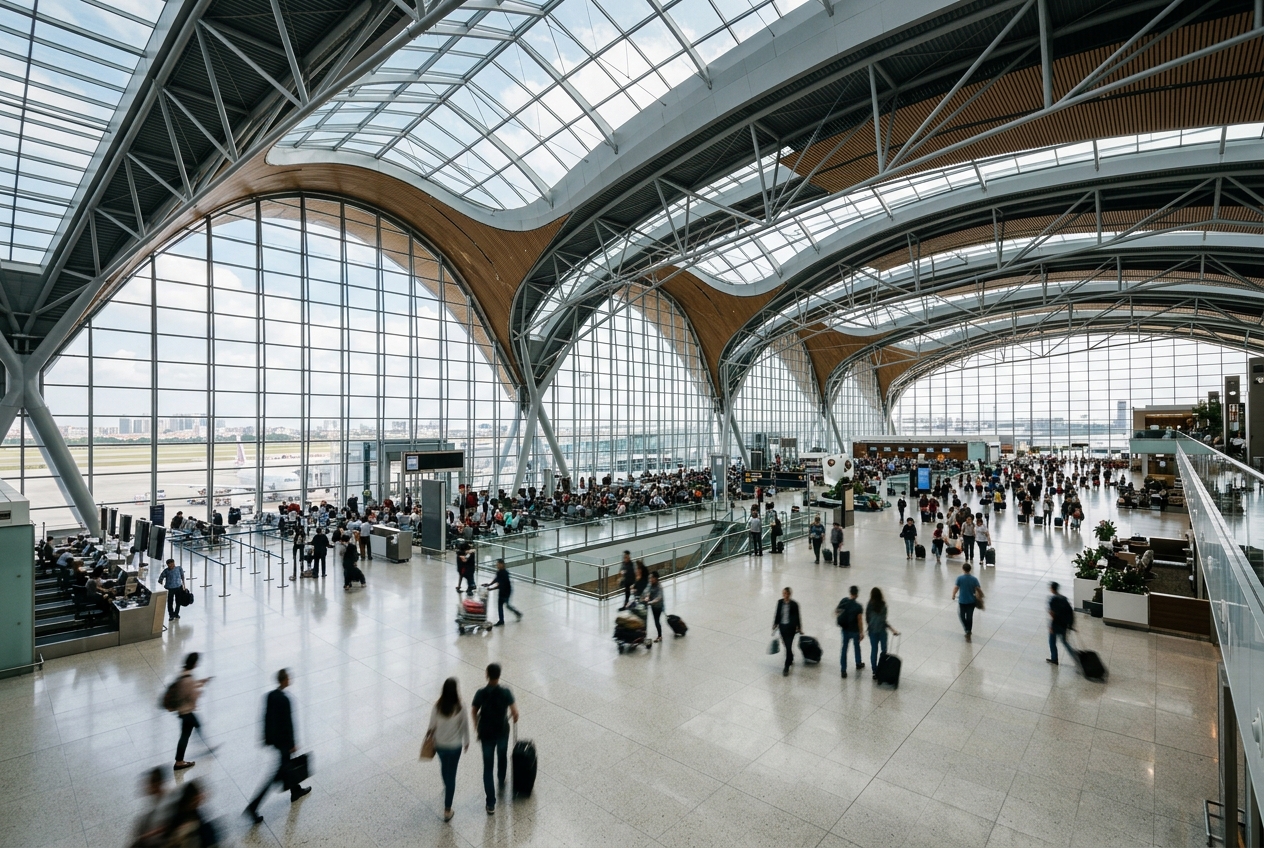
Portugal's second busiest airport serving the north.
Opened
1945
Location
Porto, Portugal
Francisco de Sá Carneiro Airport is the international airport serving Porto, Portugal's second-largest city, and the broader northern region of the country. Named after the Portuguese Prime Minister who died in a plane crash in 1980, it handles tens of millions of passengers annually and serves as a major gateway for both leisure and business travelers.
The airport underwent significant expansion and modernization in the early 2000s, with a new terminal designed by architect Eduardo Souto de Moura inaugurated in 2005. This terminal is widely praised for its architectural quality and efficient passenger flow.
Porto Airport connects to hundreds of destinations across Europe, the Americas, Africa, and the Middle East, with a strong emphasis on low-cost carrier traffic. It consistently ranks among the busiest airports in Portugal and the Iberian Peninsula.
Terminals
The airport operates a single main passenger terminal, opened in 2005 and designed by Pritzker Prize-winning architect Eduardo Souto de Moura.
Getting to & from
The airport is connected to Porto city centre by the Metro do Porto Line E (Violet line), with journey time of approximately 30 minutes to São Bento station.
Airlines here
Major carriers include TAP Air Portugal, Ryanair, easyJet, Vueling, and Wizz Air, with Ryanair being one of the largest operators.
Notable facts
- ›Named after Prime Minister Francisco de Sá Carneiro, who died near the airport in a 1980 plane crash.
- ›The 2005 terminal was designed by Eduardo Souto de Moura, a Portuguese Pritzker Prize laureate.
- ›It is the second busiest airport in Portugal after Lisbon Humberto Delgado Airport.
- ›The airport handled over 13 million passengers in 2019, a record at the time.
- ›Situated approximately 11 kilometres northwest of Porto city centre in the municipality of Maia.
This profile is provided for general information only. Details may be inaccurate or outdated — always verify with the airport's official website before acting on them.