AirlinesAirports.com
Travel planning byTravelerPulse.pro
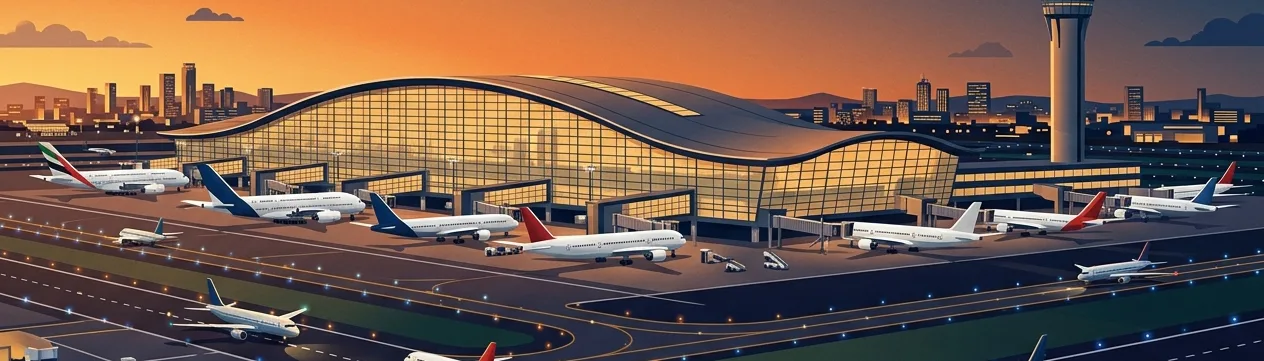
Melbourne Airport International Hub illustrationInternational Hub
Airports
MELlarge airport

Melbourne Airport

Melbourne, Australia
Explore Melbourne city guide Navigate to this airport
137
Routes out
55
Destinations
YMML
ICAO
434 ft
Elevation
AirlinesAirports profile

Australia's second-busiest airport, gateway to Victoria.

Opened
1970
Location
Melbourne, Australia
Melbourne Airport (MEL), officially known as Melbourne Airport and also referred to as Tullamarine Airport, is the primary international and domestic airport serving Melbourne, Victoria, Australia. Located approximately 23 kilometres north-west of the Melbourne CBD, it handles tens of millions of passengers annually and serves as a major hub for both international and domestic aviation. The airport is owned and operated by Australia Pacific Airports Corporation (APAC) and features four terminals: two dedicated to domestic operations and two handling international flights. It is the second-busiest airport in Australia after Sydney Kingsford Smith Airport. Melbourne Airport plays a critical role in Australia's aviation network, hosting Qantas, Jetstar, Virgin Australia, and numerous international carriers. The airport has undergone significant expansions over the decades to accommodate growing passenger demand and continues to invest in infrastructure upgrades.
Terminals
The airport operates four terminals: Terminal 1 (international), Terminal 2 (international/Jetstar), Terminal 3 (Qantas domestic), and Terminal 4 (Virgin Australia and others domestic).
Getting to & from
Ground transport options include the SkyBus express coach service to the Melbourne CBD, taxis, ride-share services, and private car hire, with a rail link long planned but not yet operational.
Airlines here
Major airlines operating here include Qantas, Jetstar, Virgin Australia, Rex Airlines, Air New Zealand, Singapore Airlines, Emirates, Cathay Pacific, and many other international carriers.
Notable facts
  • Melbourne Airport opened in 1970, replacing Essendon Airport as Melbourne's primary airport.
  • It is Australia's second-busiest airport by passenger traffic.
  • The airport sits at an elevation of approximately 434 feet (132 metres) above sea level.
  • A direct rail link to the CBD has been proposed and debated for decades and remains under planning as of the mid-2020s.
  • The airport covers an area of approximately 2,832 hectares and operates two parallel runways.
This profile is provided for general information only. Details may be inaccurate or outdated — always verify with the airport's official website before acting on them.

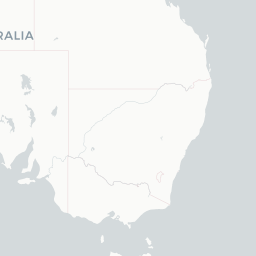
Route map (55 destinations)

Leaflet © OpenStreetMap © CARTO

Routes

MEL → CTU3U · 330
MEL → ADLAA · 737
MEL → BNEAA · 737
MEL → CBRAA · 737
MEL → LAXAA · 380
MEL → PERAA · 330 737
MEL → SYDAA · 737 763
MEL → DELAI · 788
MEL → SYDAI · 788
MEL → HKGAY · 333
MEL → AUHAZ · 77W
MEL → BWNBI · 787
MEL → PVGCA · 330
MEL → HKGCX · 333
MEL → CANCZ · 333
MEL → KULD7 · 330
MEL → LAXDL · 77W
MEL → AKLEK · 388
MEL → DXBEK · 388
MEL → KULEK · 77W
MEL → SINEK · 77W
MEL → WLGEK · 73H
MEL → SINET · 388
MEL → AUHEY · 77W
MEL → NANFJ · 73H
MEL → CGKGA · 332
MEL → DPSGA · 333
MEL → ADLJQ · 320
MEL → AKLJQ · 320
MEL → BKKJQ · 332
MEL → BNEJQ · 321 320
MEL → BNKJQ · 320
MEL → CHCJQ · 320
MEL → CNSJQ · 321 320 332
MEL → DPSJQ · 788
MEL → DRWJQ · 320
MEL → HBAJQ · 320 321
MEL → HKTJQ · 788
MEL → HNLJQ · 332
MEL → HTIJQ · 320
MEL → LSTJQ · 320
MEL → MCYJQ · 320
MEL → NRTJQ · 332
MEL → NTLJQ · 320
MEL → OOLJQ · 321 320
MEL → PERJQ · 320
MEL → SINJQ · 332
MEL → SYDJQ · 320 321 788
MEL → TSVJQ · 321
MEL → ZQNJQ · 320
MEL → KULMH · 333 772
MEL → AKLMU · 73H
MEL → PVGMU · 332
MEL → SINMU · 333
MEL → WLGMU · 73H
MEL → AKLNZ · 320 773
MEL → CHCNZ · 320
MEL → PVGNZ · 330
MEL → WLGNZ · 320
MEL → MNLPR · 343

Stay, Eat & Explore: Melbourne

Australia's culture capital

  • Laneways & Street Art — Hosier Lane's ever-changing spray-can gallery.
  • Queen Victoria Market — 150-year-old sheds of produce and night feasts.
  • Royal Botanic Gardens — 38 hectares curling along the Yarra.
  • Melbourne Cricket Ground — The 100,000-seat cathedral of Aussie sport.
  • St Kilda & Brighton Bathing Boxes — Penguins at the pier and rainbow beach huts.

Getting around: Free City Circle trams loop the CBD — the world's biggest tram network; SkyBus links Tullamarine; Myki cards cover it all.

Hotels near MEL

Pick what matters for your layover or early flight, then compare on your favorite booking site.

Compare stays for your dates

AirlinesAirports may receive compensation when you book or purchase through some of the links on this page, at no additional cost to you. Prices and availability are set by the booking provider and may change. We never share your private trip details with partners — only the destination, dates and party size you searched.

City & Place Guide

Where culture, coffee, and sport collide in vibrant style.

Melbourne is Australia's second-largest city and consistently ranks among the world's most liveable cities. Set on Port Phillip Bay in the state of Victoria, it blends a rich colonial past with a dynamic, multicultural present, offering world-class galleries, restaurants, and live music venues.

The city is celebrated for its laneway culture, where hidden bars, street art by artists like Banksy, and specialty coffee roasters reward curious explorers. Neighbourhoods such as Fitzroy, Collingwood, and St Kilda each carry a distinct personality, making neighbourhood-hopping one of Melbourne's great pleasures.

  • Federation Square — the cultural heart of the city, hosting galleries, events, and the Ian Potter Centre.
  • Queen Victoria Market — a vast 19th-century market perfect for fresh produce, local crafts, and street food.
  • Royal Botanic Gardens — 38 hectares of manicured gardens beside the Yarra River, ideal for a peaceful stroll.
  • National Gallery of Victoria — Australia's oldest and most visited art museum with free permanent collections.
  • Melbourne Cricket Ground (MCG) — an iconic 100,000-seat stadium and shrine to Australian sporting culture.
  • Hosier Lane — Melbourne's most famous street-art laneway, constantly evolving with fresh murals and installations.

Getting around: Melbourne's public transport network is centred on the myki smartcard system, covering trams (including a free City Circle Tram in the CBD), suburban trains, and buses. The extensive tram network is the largest in the world outside of Europe and is the easiest way to navigate the inner city. Taxis and rideshare services such as Uber and Ola are widely available for late-night or cross-suburb travel.

Best time: The best time to visit Melbourne is during autumn (March to May) when temperatures are mild, crowds are thinner, and the city's food and arts festivals are in full swing.

Local food: Don't miss a flat white at a specialty café, a meat pie at a local bakery, fresh seafood at the Queen Victoria Market, and a multicultural feast along Victoria Street's Little Saigon or Lygon Street's Italian strip.

This guide is provided for general information only. Verify details locally before making travel decisions.

Passport, Visa & Immigration

Flying internationally via MEL? Check entry, transit and customs requirements for Australia from official government sources.

Melbourne Airport
Encyclopaedia

Melbourne Airport, colloquially known as Tullamarine Airport, is an international airport serving Melbourne, Victoria, the second largest city in Australia. It is located in the suburb of Melbourne Airport and is approximately 22 kilometres (14 mi) northwest of the Melbourne city centre.

Read full article on Wikipedia