

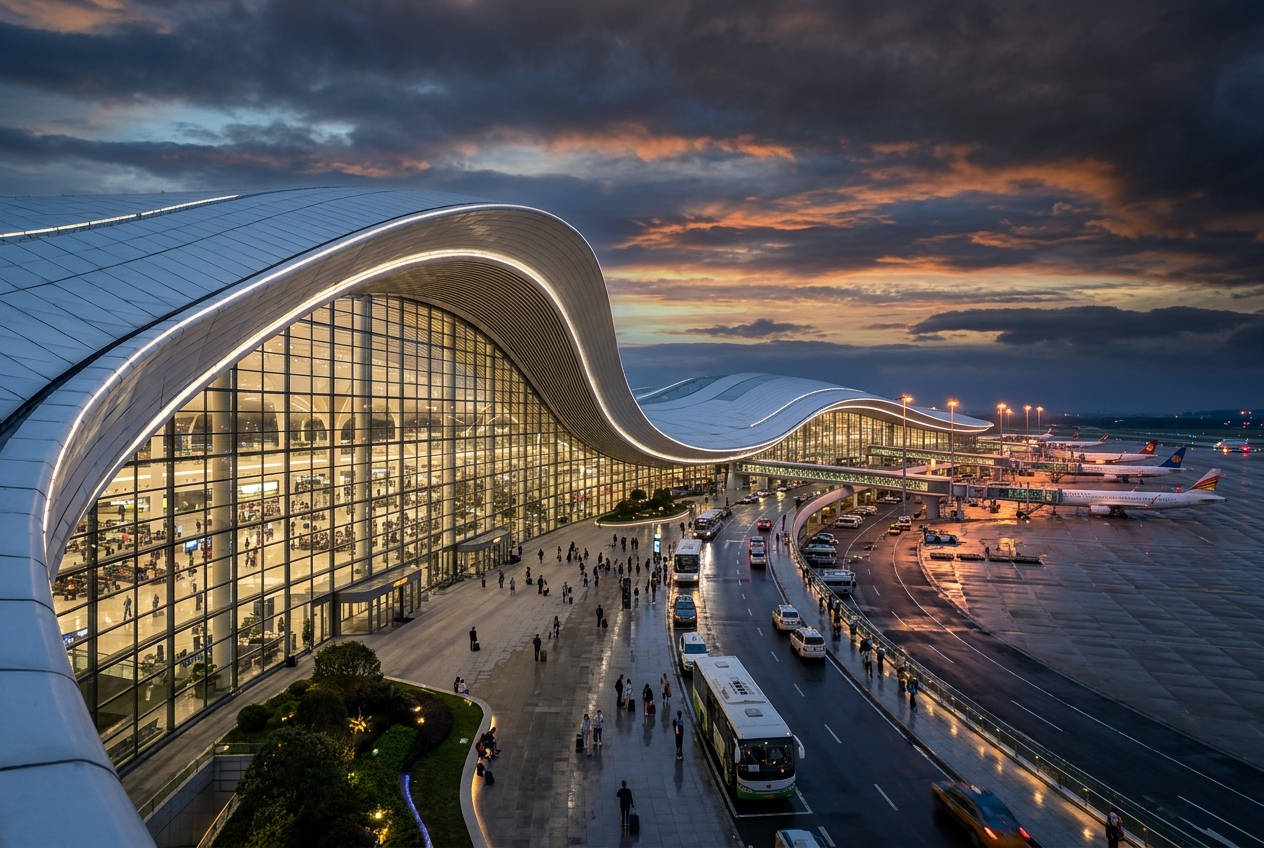
Yerevan's historic military airfield serving Armenia's armed forces.
Opened
1930s
Location
Yerevan, Armenia
Erebuni Airport is a military airfield located in the southern part of Yerevan, Armenia. It serves as a base for the Armenian Air Force and is not open to commercial passenger traffic. The facility sits adjacent to the ancient Erebuni Fortress, an Urartian citadel dating back to 782 BC.
The airport has historically hosted Russian military forces as part of broader defense arrangements in the South Caucasus region. It operates independently from Zvartnots International Airport, which handles all civilian air traffic for the Yerevan metropolitan area.
Erebuni Airport occasionally hosts military exercises, airshows, and official government aviation activities. Its strategic location within the capital city underscores its importance to Armenia's national defense infrastructure.
Notable facts
- ›Operates exclusively as a military airfield for the Armenian Air Force.
- ›Located near the ancient Erebuni Fortress, a UNESCO-recognized Urartian archaeological site.
- ›Has hosted Russian military units as part of bilateral defense agreements.
- ›No commercial or civilian passenger flights operate from this airport.
- ›Occasionally used for military airshows and official government aviation events.
This profile is provided for general information only. Details may be inaccurate or outdated — always verify with the airport's official website before acting on them.
