

Scandinavia's busiest hub connecting Europe and beyond.
Opened
1925
Location
Copenhagen, Denmark
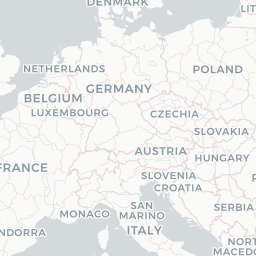
Copenhagen Airport, officially known as Copenhagen Kastrup Airport, is the largest and busiest airport in the Nordic countries. Located on the island of Amager, approximately 8 kilometres southeast of central Copenhagen, it serves as the primary international gateway for Denmark and a key hub for the wider Scandinavian region.
The airport handled around 26–30 million passengers annually before the COVID-19 pandemic disrupted global air travel, and has been recovering steadily since. It is the main hub for Scandinavian Airlines (SAS) and a significant base for several low-cost carriers including easyJet and Norwegian Air Shuttle.
Copenhagen Airport is widely regarded as one of Europe's most efficient and passenger-friendly airports, consistently ranking highly in global airport quality surveys. Its integrated rail link makes it one of the best-connected airports on the continent.
Terminals
The airport operates three passenger terminals (Terminal 1 for domestic, Terminal 2 for non-Schengen international, and Terminal 3 for Schengen international flights), all interconnected within a compact, walkable layout.
Getting to & from
Copenhagen Airport is directly connected to Copenhagen Central Station and Malmö, Sweden, via the CPH Express and regional rail services running through the on-site metro and train station, with journey times of approximately 15 minutes to the city centre.
Airlines here
Scandinavian Airlines (SAS) uses CPH as its primary hub, while Norwegian Air Shuttle, easyJet, and numerous European and intercontinental carriers also operate regular services.
Notable facts
- ›Copenhagen Airport opened in 1925, making it one of the oldest commercial airports in Europe still in operation.
- ›The airport is connected to Malmö, Sweden, via the Øresund Bridge, making it a binational gateway.
- ›CPH has an on-site train station served by both regional and intercity rail, including services to Sweden.
- ›The airport has repeatedly been named the best airport in Europe by Airports Council International (ACI).
- ›A significant expansion project, CPH 2030, is planned to increase capacity and sustainability.
This profile is provided for general information only. Details may be inaccurate or outdated — always verify with the airport's official website before acting on them.