
AirlinesAirports.com
Travel planning byTravelerPulse.pro
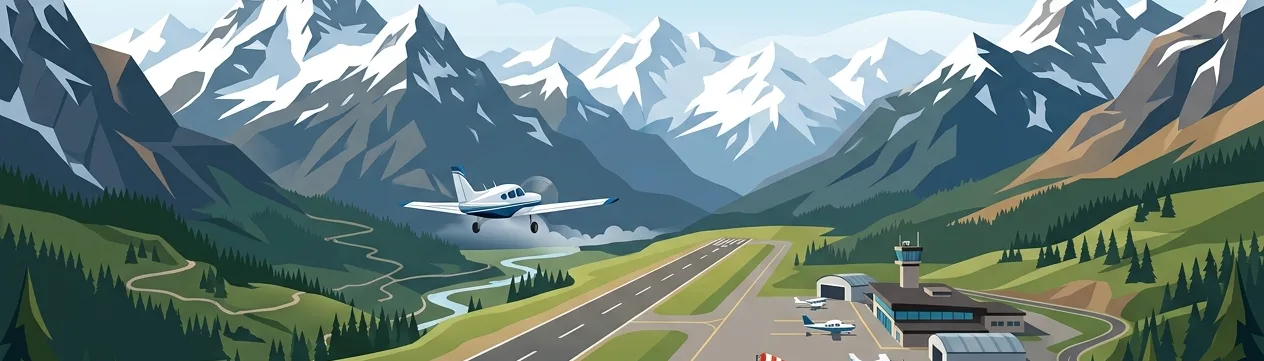
Gordon Field Mountain Airport illustrationMountain Airport
Airports
small airport

Gordon Field

Fort Nelson, Canada
Explore Fort Nelson city guide Navigate to this airport
0
Routes out
0
Destinations
CBL3
ICAO
1625 ft
Elevation
AirlinesAirports profile

Small remote airfield serving northern British Columbia communities.

Location
Fort Nelson, Canada
Gordon Field (ICAO: CBL3) is a small general aviation airfield located near Fort Nelson in northeastern British Columbia, Canada. It serves as a supplementary airfield in the region, supporting private and charter operations in an area characterized by remote wilderness and limited road access. Fort Nelson's primary commercial air service is handled by Fort Nelson Airport (YYE), while Gordon Field functions as a secondary facility. The airfield supports activities typical of northern Canadian operations, including bush flying, resource-industry support flights, and emergency access to remote areas.
Notable facts
  • Located in northeastern British Columbia near the Alaska Highway corridor.
  • Operates as a general aviation and supplementary airfield, not a commercial airport.
  • The Fort Nelson region is known for oil and gas industry activity, which drives some aviation demand.
  • Fort Nelson's primary commercial airport with scheduled service is Fort Nelson Airport (IATA: YYE).
  • The area experiences extreme northern weather conditions that influence flight operations.
This profile is provided for general information only. Details may be inaccurate or outdated — always verify with the airport's official website before acting on them.

Airlines serving this airport

No scheduled airline data available.

Routes

No route data available.

Hotels near Gordon Field

Pick what matters for your layover or early flight, then compare on your favorite booking site.

Compare stays for your dates

AirlinesAirports may receive compensation when you book or purchase through some of the links on this page, at no additional cost to you. Prices and availability are set by the booking provider and may change. We never share your private trip details with partners — only the destination, dates and party size you searched.

City & Place Guide

Gateway to the Northern Rockies and true wilderness adventure

Fort Nelson is a small northern community in British Columbia, Canada, situated at the junction of the Alaska Highway and the Fort Nelson River. It serves as a practical base for travelers heading into Stone Mountain Provincial Park, Muncho Lake, and the broader Northern Rockies region.

The town has a rugged, frontier character shaped by its oil and gas industry, Indigenous Dene Zhie history, and position along one of North America's great road-trip routes. Visitors often pass through while driving the Alaska Highway, but those who linger discover rich wildlife, dramatic landscapes, and genuine northern hospitality.

Surrounding wilderness offers outstanding opportunities for fishing, wildlife watching, hiking, and, in winter, spectacular northern lights viewing far from any light pollution.

  • Fort Nelson Heritage Museum — compelling local history including Alaska Highway construction artifacts
  • Stone Mountain Provincial Park — stark, remote peaks and abundant Stone sheep and caribou
  • Muncho Lake Provincial Park — stunning turquoise lake ringed by the Northern Rockies
  • Liard River Hot Springs — natural thermal pools a short drive north along the Alaska Highway
  • Fort Nelson River — prime fishing for northern pike, grayling, and Dolly Varden
  • Tetsa River Regional Park — peaceful camping and fishing in classic boreal scenery

Getting around: Fort Nelson has no public transit system or passenger rail service. Most visitors arrive by car along the Alaska Highway, and a personal vehicle is essential for exploring the region. Taxis operate locally in limited capacity, and rideshare apps are not reliably available. The Fort Nelson Airport (YYE) offers scheduled flights connecting to Fort St. John and beyond.

Best time: Late May through early September offers the best weather for outdoor adventure, with long daylight hours and accessible roads into the parks.

Local food: Try fresh-caught northern pike or Arctic grayling prepared at local establishments, and look for hearty Canadian comfort food and Indigenous-inspired dishes featuring wild game such as moose and bison.

This guide is provided for general information only. Verify details locally before making travel decisions.